 302-929-7676



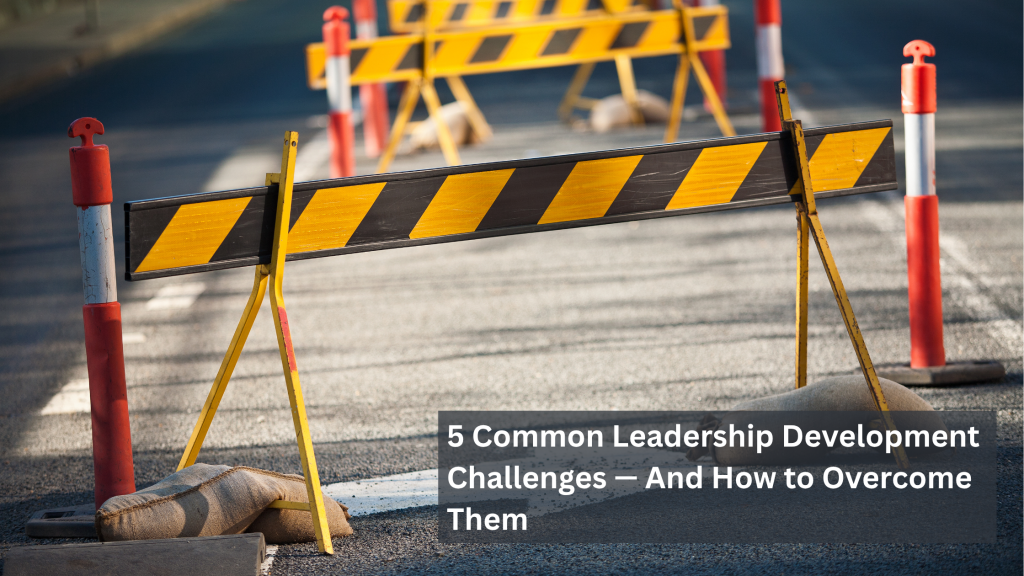
Many organizations know they need strong leaders, but few have a clear path to develop them. Leadership development often feels like a moving target. Time, energy, and resources are invested, yet the outcomes are inconsistent or difficult to sustain. The result, leadership development challenges persist and growth stalls.
In working with organizations across sectors, Aspire Leadership has observed a clear pattern: most teams face similar barriers to developing effective leaders. Fortunately, most obstacles can be overcome with clarity, consistency, and the right structure.
When these challenges go unaddressed, the consequences are easy to spot: unclear expectations, stalled team performance, overwhelmed managers, and underdeveloped talent pipelines. Organizations risk burnout, misalignment, and a leadership bench that is not ready to meet the demands of growth. But when leaders and teams commit to identifying and addressing these barriers, they lay the foundation for consistent, meaningful leadership development across every level of the organization.
This blog explores the five most common leadership development challenges and how to address them. Whether you are developing leaders in a business, nonprofit, or ministry, recognizing these obstacles is the first step toward creating a stronger, more resilient leadership culture.
Let’s take a look at Challenge #1.
One of the most common challenges is the absence of a shared definition of leadership. Many organizations use the term often, but few teams agree on what leadership actually looks like in their context.
Without clarity, leadership development becomes vague. Who qualifies as a leader? What should they be growing toward? What does success look like?
For example: In one organization, each department held a different view of leadership—some emphasized authority, others service, and others technical expertise. This led to mixed signals for employees and uneven development across the team.
The solution is to define leadership based on your organization’s values, mission, and expectations. Be specific. Identify the behaviors, mindsets, and responsibilities that reflect effective leadership in your environment.
Create leadership standards that are both aspirational and actionable, anchored in identity and reinforced by daily behaviors, and communicate them to every single employee. Employees at every level should know what leadership means at your organization and how they can grow.
If you have not already, take the time to write out your organization’s leadership standards and development plans. This clarity will be the foundation for every decision you make about training, mentoring, and culture. If you need help getting started, Aspire Leadership has helped many organizations define and align their leadership expectations, and we can help you do the same. Schedule your free leadership review call today.

One of the most persistent challenges in leadership development is treating development as a one-time event instead of an ongoing process. A single workshop, retreat, or online course may inspire, but it will not sustain real change on its own.
Without continued reinforcement, most people return to familiar habits, regardless of how inspiring the initial experience may have been. Leadership skills are not formed in a moment. They are formed through repetition, reflection, and regular application.
Consider this scenario: A company sends high-potential employees to an intensive leadership seminar. The event is well-received, and motivation is high. But when those employees return, there is no follow-up, coaching, or feedback. Within a few weeks, the momentum is gone, and the organization sees little real change.
The solution is to build leadership development into the fabric of the organization. Leaders need structured rhythms of growth that include:
Consistent support helps translate inspiration into transformation. Aspire Leadership’s development programs equip leaders with practical tools and teach them how to integrate support systems that keep leadership development alive well beyond the first training. This ensures that growth is not only possible but also sustainable.
While building long-term development systems is essential, it is equally important to ensure that those systems reach the people who need them most. Leadership development efforts often focus on two groups—senior executives and rising young talent. In the process, one critical layer gets missed: mid-level managers.
These leaders are the bridge between strategy and execution. They carry significant responsibility for people, performance, and culture. Yet they are frequently left out of formal development plans. When this happens, managers are left to figure things out on their own, often without the tools or support they need to lead effectively.
Without clear guidance, mid-level managers may struggle to set priorities, manage conflict, coach team members, or make confident decisions. Over time, this creates a ripple effect across teams and departments.
The solution is to invest in this essential tier of leadership. Mid-level managers need practical and tailored training to their day-to-day realities. This includes:
Mid-level managers need support just as much as senior leaders or high-potential employees. When equipped with the tools, clarity, and confidence to lead well, they strengthen team performance, reduce friction, and create alignment between vision and execution. Investing in this layer of leadership builds stability across the organization and ensures that leadership is not just held at the top, but modeled and multiplied throughout the team.
Even with the right people in the right roles, leadership growth will stall without consistent input and support. The best leadership training will fall short without systems for feedback and accountability. Leaders may attend a workshop or set development goals, but without consistent input, their growth becomes difficult to measure and easy to abandon.
Feedback provides clarity. It helps leaders understand how they are showing up, what is working, and where they need to adjust. Accountability ensures that intentions lead to action. Without both, leadership development becomes an isolated effort rather than a supported journey.
In many organizations, feedback is inconsistent or avoided altogether. Managers may not feel equipped to offer meaningful input, or there may be no formal structure in place to support growth conversations.
The solution is to embed feedback and accountability into the regular rhythm of work. This can include:
When feedback is timely, thoughtful, and trusted, it becomes a catalyst for growth. Leaders gain insight, adjust their habits, and continue building the skills that serve their teams and mission. Take the time right now or in the near future to schedule out recurring feedback conversations on your calendar—it is one of the simplest and most effective steps you can take to reinforce leadership development across your team.

Sustainable leadership development requires more than individual effort or structured feedback—it requires a culture that reinforces and supports growth at every level.
Leadership training will not take root in a culture that contradicts it. Even the most well-designed development plan will struggle if the surrounding environment discourages growth, initiative, or feedback.
In some organizations, leaders are trained to empower others but are not given the authority to make decisions. In other organizations, employees are encouraged to take risks, but mistakes are met with criticism rather than coaching. These cultural disconnects quietly erode the impact of leadership development.
The root issue is often this: the culture does not support what the training promotes.
The solution is to align leadership development with the broader culture of the organization. Employees need to see leadership modeled, valued, and expected at every level. They need to trust that growth is not only encouraged but also safe and supported.
Start by asking:
When the culture resists leadership behaviors, it chokes out creativity, stifles innovation, and prevents teams from adapting to new challenges. Leadership cannot thrive in an environment that punishes risk, silences feedback, or discourages ownership. But when the environment supports leadership development, growth takes hold. Confidence builds. Leaders step forward because they know they are not alone—they are part of a culture that believes in and invests in their growth.
Each of these leadership development challenges is common, but none of them are insurmountable. The real danger lies in ignoring them.
When organizations do not address these barriers, the consequences compound: talented employees feel stuck, team performance stalls, and leadership capacity remains concentrated in too few individuals. Growth slows, burnout rises, and the leadership bench remains thin.
The good news is that these challenges can be overcome with focus and intention. Leadership development becomes truly effective when it is:
When these elements are in place, leadership growth becomes more than a goal. It becomes a sustainable pattern, a system, a culture.
Aspire Leadership partners with organizations to overcome leadership development challenges. Together, we create clear, practical, and proven-to-work leadership development strategies. Our approach is not about one-time inspiration—it is about building capacity for the long haul.
Leadership development is not a luxury. It is a necessity. The negative ripple effect of not addressing leadership development challenges in your organization can be crippling. Without leadership development, organizations remain reactive, over-reliant on a few individuals, and unprepared for future challenges. Teams lack direction. Potential goes untapped, and mission-driven work falls short of its full impact.
But when leadership development is done right, the difference is clear. Leaders grow with confidence, teams align with purpose, and culture shifts toward resilience, trust, and shared responsibility.
Aspire Leadership has helped organizations across industries design and implement leadership development strategies that create a remarkable impact and last. Our experience shows that when you invest intentionally—grounding development in identity, supported by habit, and aligned with culture—you do more than fill leadership roles. You shape a new kind of leader and a healthier, more sustainable organization.
If you are ready to face your leadership development challenges and start building the structure your team needs, we are here to help.
Book a free 15-minute call with a program specialist, or apply directly to start your cohort.