 302-929-7676






What does it take to be a strong leader in a faith-based organization? Is it vision, charisma, or a strategic mind? While all these qualities can be beneficial, faith-based leadership in a Christian context demands something deeper—an unwavering commitment to biblical principles.
But leading in ministry or a faith-based organization comes with unique challenges. The demands of balancing administrative responsibilities, shepherding people, and staying spiritually strong can feel overwhelming.
How do you lead effectively while staying rooted in your faith?
Imagine a pastor named James who oversees a growing church. He loves preaching and ministering to people, but as his congregation expands, so do the pressures of leadership. Volunteers are burning out, staff members have conflicts, and difficult decisions must be made. James starts to feel isolated, unsure of how to navigate the complexities of leadership while staying true to his calling. He wonders if he’s truly equipped for the role God has given him.
But you don’t have to lead alone. Faith-based leadership development for leaders in ministry and faith-based organizations provides the guidance and support needed to navigate these challenges.
The Bible offers essential wisdom and direction for leaders like James, ensuring they lead with humility, wisdom, integrity, and courage. Faith-based leadership development takes these Biblical principles and equips faith-based leaders with the tools to develop healthy and thriving teams that are on a mission.
Aspire Leadership knows leading in ministry or a faith-based organization carries a lot of responsibility and can seem like a lonely path, but you are not alone. We understand the weight faith-based leaders carry, and we have designed leadership development programs to support and strengthen you. If you are ready to lead your teams with purpose and clarity, schedule a call to learn more.
The rest of this blog takes a look at what the Bible has to say about leadership and how we can apply these teachings to create stronger, more effective leaders in ministry and faith-based organizations.
One of the greatest challenges in faith-based leadership is balancing authority with humility.
As leaders, the weight of responsibility can feel heavy—the need to make decisions, solve problems, and ensure everything runs smoothly can lead to an unintentional top-down approach.
However, biblical leadership is not about exercising power; it’s about serving others.
True leadership, as modeled by Jesus, requires humility, selflessness, and a commitment to lifting others up rather than seeking status or control.
The Bible gives us many examples of servant leadership and calls for leaders to serve those around them.
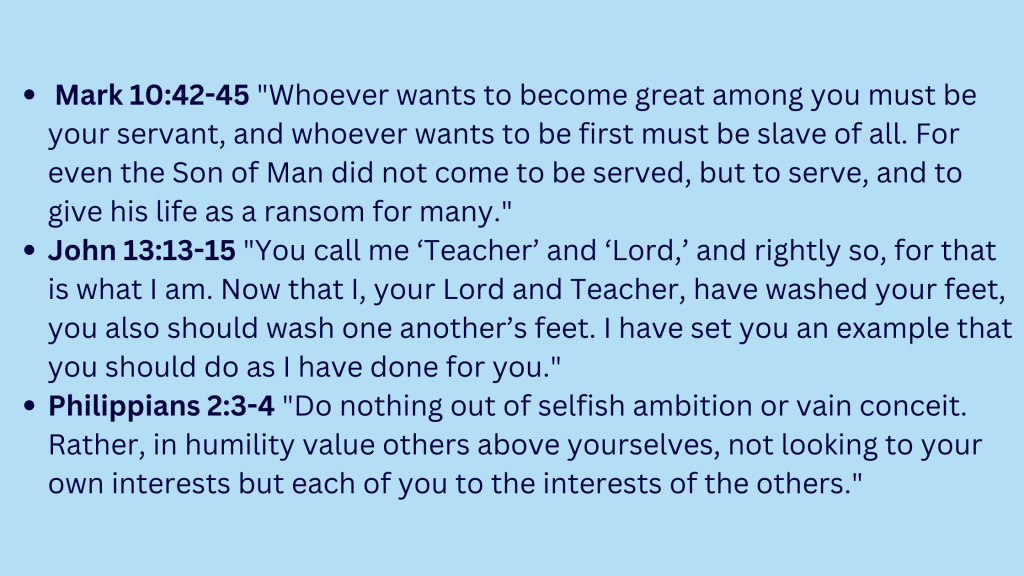
Ministry and faith-based leaders can apply these principles by leading with humility, prioritizing the well-being of their team, and fostering a culture of service.
Servant leadership is not just a mindset—it’s a daily practice that requires intentionality and action.
Practical ways leaders can serve their teams:
When leaders model servant leadership, they create an environment where people feel supported, valued, and inspired to serve others in return.
A culture of service strengthens ministries and faith-based organizations, fostering unity and reflecting Christ’s love and humility.
Leadership often requires making difficult decisions, managing conflict, and guiding a team toward a shared vision. Many leaders struggle with uncertainty—wondering if they are making the right choices or feeling overwhelmed by responsibility.
Scripture tells us that we can and should turn to the Lord for even the smallest decisions, questions, or problems. He hears our prayers. As Christians, we have the ultimate advisor, the Holy Spirit, who is ready to teach us, if we will listen.
The Bible reminds us that true wisdom comes from God.
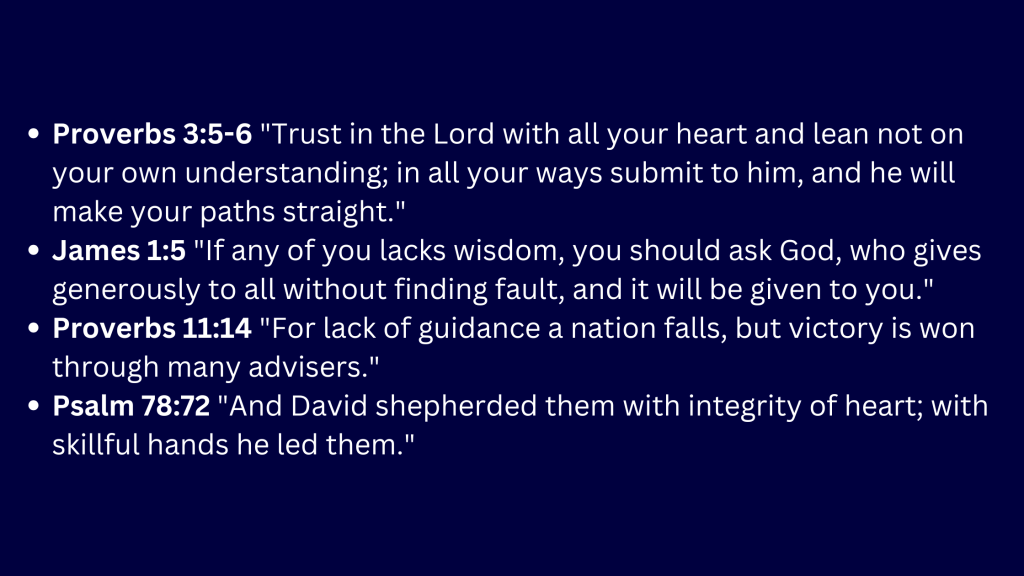
To lead well, faith-based leaders must seek wisdom through prayer, scripture, as well as, through wise counsel. Surrounding themselves with trusted advisors and mentors can help leaders navigate challenges with discernment and confidence.
Here are ways leaders can apply biblical wisdom:
Leaders who rely on God’s wisdom will find clarity, peace, and direction in their leadership journey. Surrounding themselves with trusted advisors and mentors can help leaders navigate challenges with discernment and confidence.
Trust is the foundation of leadership, and integrity is key to earning that trust. In faith-based leadership, trust extends beyond human relationships—it reflects a leader’s commitment to God and His principles. Integrity in leadership fosters an environment where people feel safe, valued, and respected.
When leaders uphold righteousness, their teams and communities thrive because they know their leader is honest, just, and guided by biblical principles.
A leader’s character directly influences the culture of their ministry or organization.
The Bible repeatedly emphasizes the importance of integrity in leadership. It is not an optional trait but a foundational requirement for those called to lead.
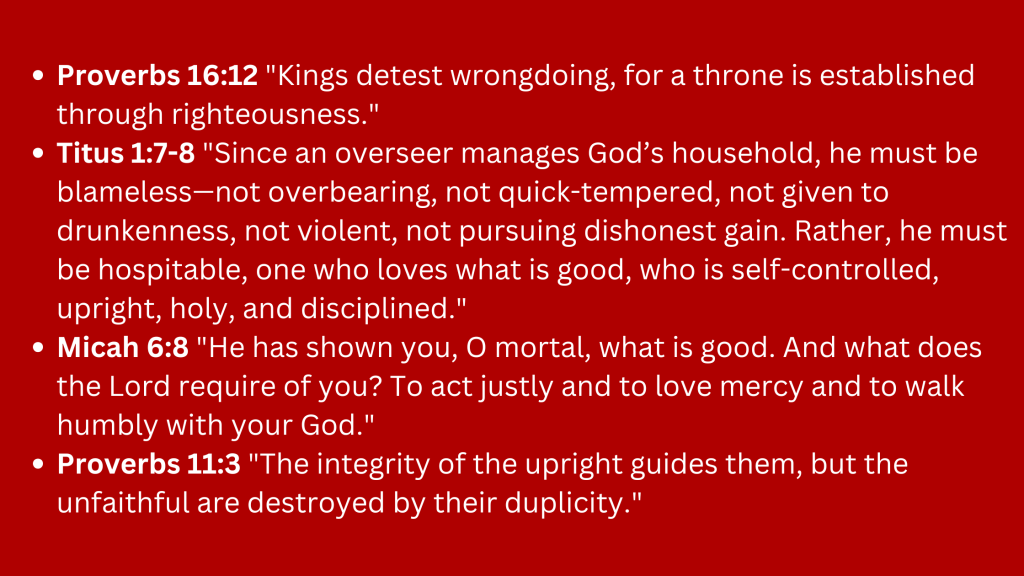
Leaders must be unwavering in their commitment to truth, honesty, and righteousness, knowing that their example impacts both their team and the people they serve. How can faith-based leaders apply these principles daily?
Here are some practical steps:
Ministries and organizations built on trust, honesty, and ethical leadership experience numerous benefits.
Ethical leadership promotes unity by fostering a culture of accountability, which helps reduce division and conflict. A trustworthy leader also strengthens team morale, creating an environment where people feel secure, valued, and motivated. Additionally, organizations rooted in integrity are more resilient against crises and conflicts, ensuring long-term stability.
But most importantly, faith-based leadership is about more than just managing a ministry or organization—it is about living out biblical values in every decision, interaction, and relationship.
When leaders prioritize integrity, they create a culture where trust flourishes, people feel valued, and God’s name is honored.
Integrity is not just a leadership expectation—it is the very foundation of biblical leadership. A leader who walks in righteousness leaves behind a legacy that endures, impacting lives and shaping future generations.
Leadership can often feel isolating, and the fear of failure, opposition, or uncertainty can cause even the most dedicated leaders to hesitate. The weight of responsibility, difficult decisions, and the pressure to meet expectations can create moments of doubt.
However, Scripture reminds us that God equips His leaders with the strength and courage they need.
True courage is not the absence of fear but the confidence that God is present and working through every challenge.
The Bible repeatedly reassures us that we are not called to lead in our own strength but to rely on God’s power, guidance, and provision.

Stepping into leadership with boldness requires more than self-confidence—it requires faith, trust, and a willingness to surrender to God’s plan.
Here’s how leaders can embrace courage and strength in their calling:
When leaders rely on God’s strength rather than their own, they inspire confidence, unity, and resilience in their teams.
A courageous leader empowers others to trust in God’s plan, stand firm in their faith, and step boldly into their callings.
Ministries and organizations thrive when leaders model unwavering faith, demonstrating that challenges are not barriers but opportunities for God’s power to be revealed.
Leadership is not about avoiding fear—it is about trusting in God’s ability to overcome it. When leaders draw strength from Him, they are equipped to face any challenge with faith, resilience, and boldness, leaving a lasting impact on those they serve.
Leaders set the tone for their organizations, shaping the culture through their actions, attitudes, and decisions. People are more likely to follow a leader who embodies the values they preach rather than one who merely enforces them. In faith-based leadership, this means demonstrating integrity, humility, love, and faith in everyday interactions.
Leadership is not just about giving direction—it’s about modeling a Christ-centered life that inspires and encourages others to do the same.
The Bible calls leaders to be role models, not just through words but through their actions and character.

Ministry and faith-based organization leaders are called to a higher standard. They are called to live out their faith in word and action. They are called to be examples of what it looks like to be the hands and feet of Jesus.
How Can Leaders Set a Christlike Example?
When leaders consistently model Christlike character, they create a culture of excellence and faithfulness within their organizations. Their actions influence not only their teams but also the broader community, setting a standard that extends beyond their immediate leadership.
People are drawn to leaders who live with authenticity and conviction, making it easier to cultivate trust, unity, and long-term impact.
A leader’s greatest influence does not come from authority alone—it comes from the example they set each day. By leading with faith, integrity, and love, they reflect Christ’s light and inspire others to do the same.
Leadership in ministry or a faith-based organization is not just a position—it is a calling.
At Aspire Leadership, we recognize the unique challenges that come with leading ministries, churches, and faith-based organizations. The weight of responsibility, the demand for wisdom, and the expectation to lead with integrity and courage can often feel overwhelming.
But you don’t have to lead alone.
Our leadership development programs are designed specifically to equip faith-based leaders with the tools they need to lead with confidence, clarity, and conviction. We believe that strong leadership is rooted in biblical principles and practical strategies that create lasting impact within teams, congregations, and communities.
When leaders are strengthened and supported, ministries and organizations thrive.
With all its responsibilities and complexities, faith-based leadership should not be undertaken in isolation. Through our strategic development programs, we walk alongside leaders to help them develop strong biblical principles and support systems, and the confidence and skills needed to lead effectively.
Whether you are a pastor, ministry director, nonprofit leader, or part of a faith-based team, Aspire Leadership is here to support you in your leadership journey.
Are you ready to build a stronger, healthier leadership culture in your ministry or organization? Our leadership experts are ready to help you.
Together, we can lead with excellence, purpose, and biblical conviction.
Book a free 15-minute call with a program specialist, or apply directly to start your cohort.